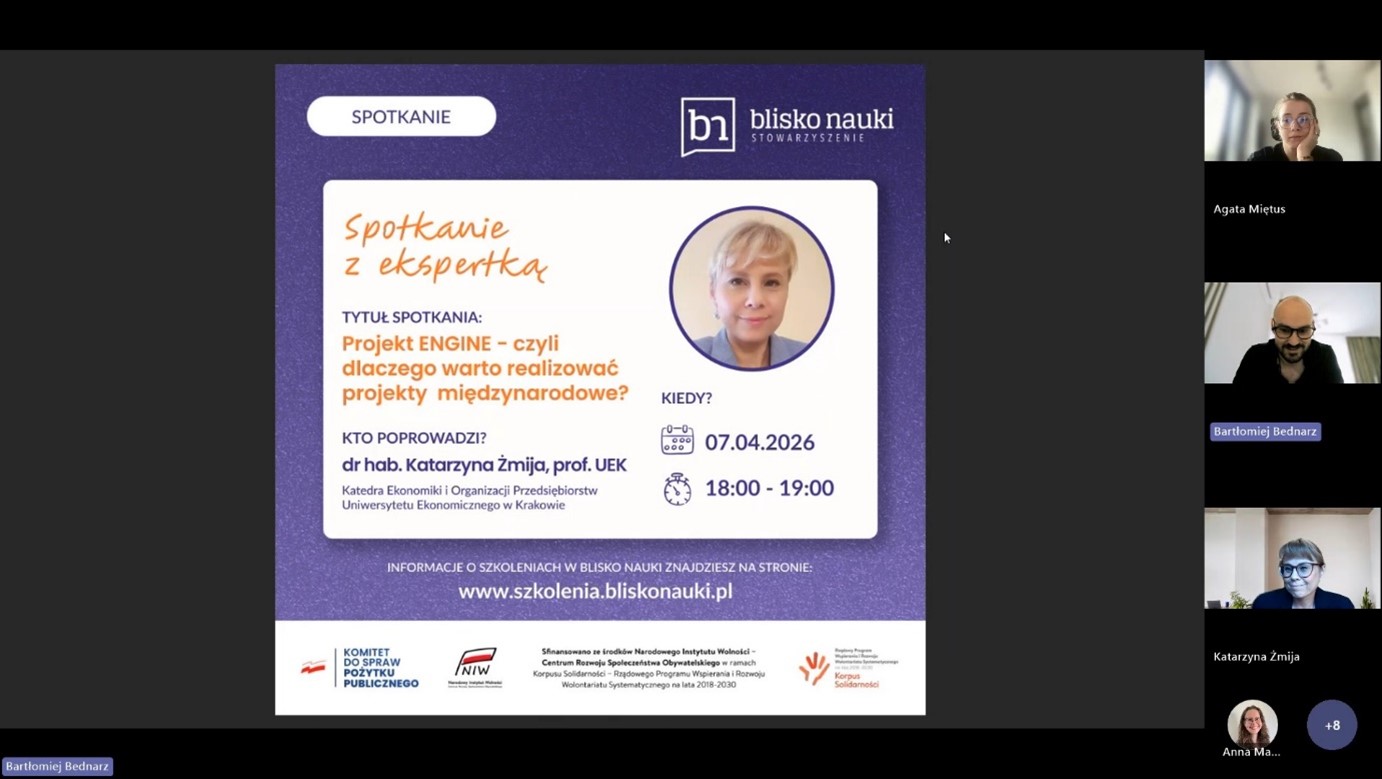


On 7 May 2026, a meeting was held with members, supporters, and collaborators of the Blisko Nauki Association to disseminate information about the international ENGINE project implemented under the Erasmus+ programme. The event had an inspirational and workshop-oriented character, creating a space for discussion on international cooperation, European project management, and the development of entrepreneurship in rural areas.
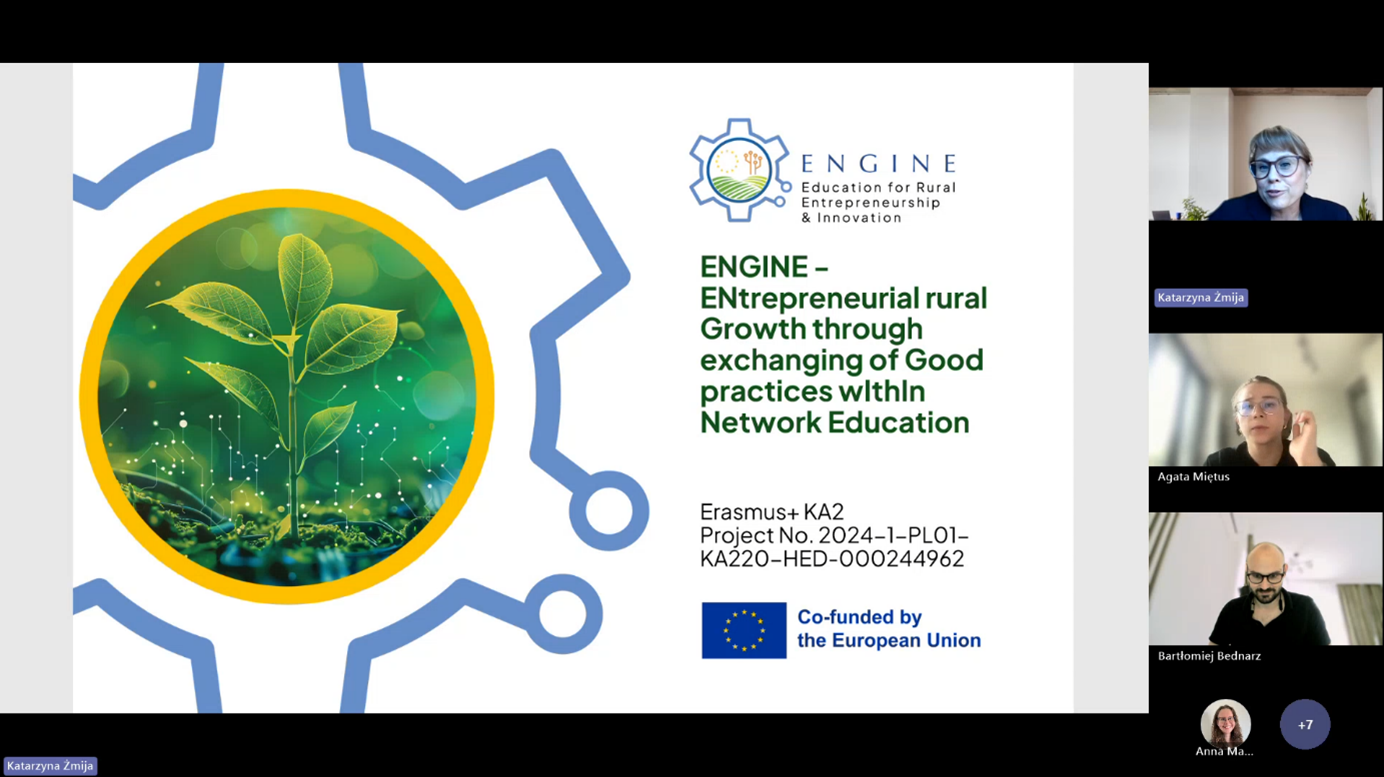
The special guest of the meeting was Professor Katarzyna Żmija from the Krakow University of Economics, who serves as the coordinator of the ENGINE project. During her presentation, she introduced the main objectives of the initiative, which focuses on developing an innovative educational tool designed to strengthen entrepreneurial and innovation-related competences among students and young people interested in rural development and entrepreneurship.
The presentation highlighted that the project responds to important social and economic challenges, including rural depopulation and the mismatch between higher education programmes and the specific conditions of entrepreneurship outside urban environments. Participants learned how ENGINE aims to support future rural leaders by creating educational resources tailored to the realities and opportunities of rural regions.
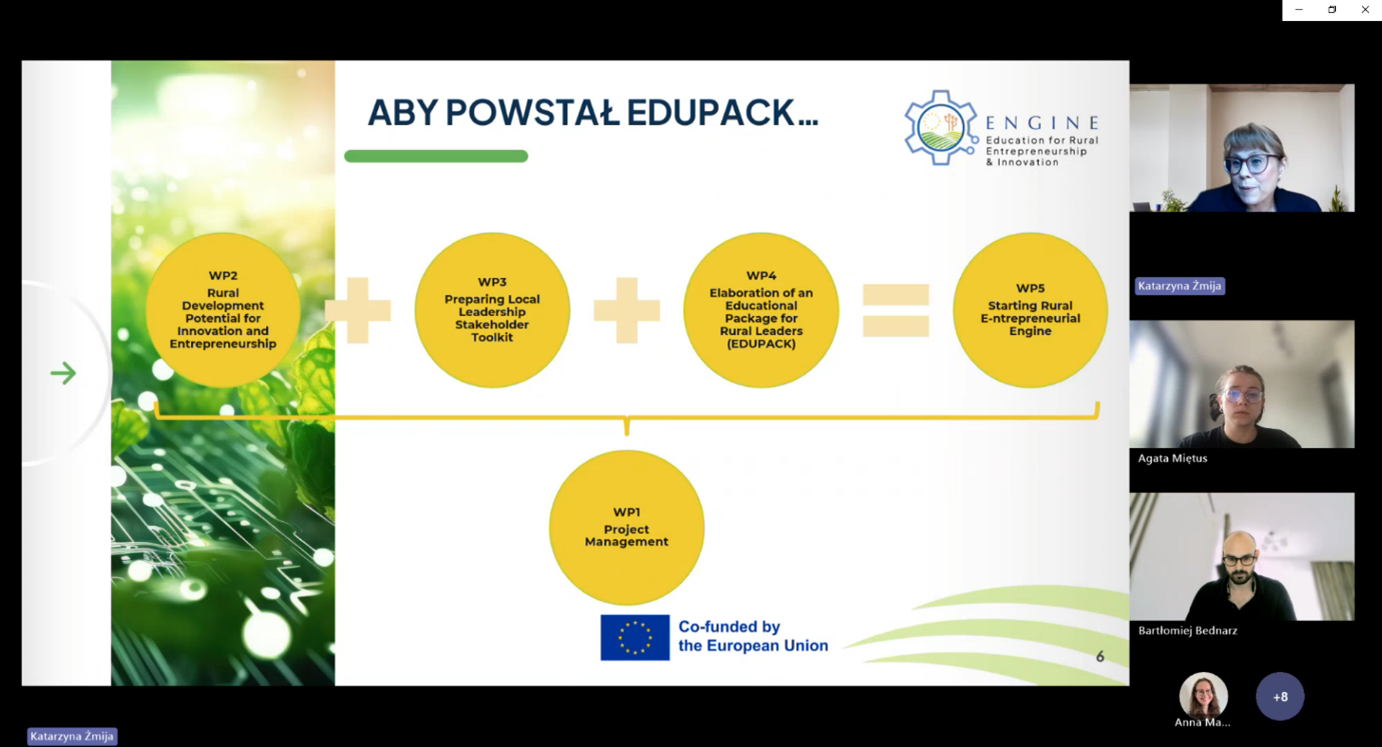
The meeting also provided an overview of the project structure and the international cooperation behind ENGINE. The consortium includes universities and partner organisations from Poland, Germany, Portugal, Greece, and Italy. Participants gained insight into the process of preparing and implementing Erasmus+ projects, as well as the challenges and benefits of working within international and interdisciplinary teams.
Particular attention was given to the practical aspects of European project implementation, such as partnership building, project management, stakeholder engagement, and maintaining effective communication within international consortia. The discussion demonstrated that participation in international projects not only enables the development of innovative educational solutions but also strengthens organisational, research, and social competences.
The meeting additionally promoted the values of civic engagement, academic cooperation, and youth participation in initiatives supporting local and regional development. Participants emphasized the inspiring nature of the event and appreciated the opportunity to learn from practical experiences related to the implementation of large-scale international projects.